
NukeWorker.com: Nuclear Jobs, Resumes, Outage Schedules, & RCT Training

NukeWorker Menu

Nuclear Pictures

NukeWorker online photo album.

Reactor Vessel Removal
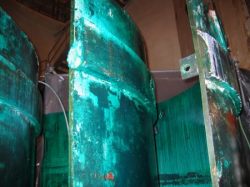
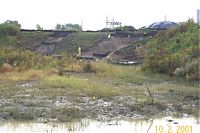
The pressure vessel was carbon steel with a stainless clad and a maximum thickness of 2-inches (50mm). Because the reactor was imbedded in the concrete bio-shield an intact removal was considered cost prohibitive. Mechanical segmentation was performed dry by Wachs Technical Services. Because of low dose rates all cutting was done hands on. Most of the cutting was done using "Wall Mills" (a type of milling machines used successfully on commercial nuclear reactors and their internals for decades). Because the outer vessel wall was wrapped in asbestos, Wachs supervised personnel provided by the abatement contractor during these final cuts. Final cutting of the reactor was done using thermal methods.

Reactor Vessel Removal

The pressure vessel was carbon steel with a stainless clad and a maximum thickness of 2-inches (50mm). Because the reactor was imbedded in the concrete bio-shield an intact removal was considered cost prohibitive. Mechanical segmentation was performed dry by Wachs Technical Services. Because of low dose rates all cutting was done hands on. Most of the cutting was done using "Wall Mills" (a type of milling machines used successfully on commercial nuclear reactors and their internals for decades). Because the outer vessel wall was wrapped in asbestos, Wachs supervised personnel provided by the abatement contractor during these final cuts. Final cutting of the reactor was done using thermal methods.

Beaver_Valley_IFR.jpg cathy_kelly.jpg Pilgrim_IFR.jpg scan0013.jpg Picture_71242.jpg
File information
Filename:reactor-vessel-segmentation-pb250.jpg
Album name:Rennhack / Plum Brook
Filesize:11 KiB
Date added:Mar 22, 2009
Dimensions:250 x 187 pixels
Displayed:2512 times
URL:https://www.nukeworker.com/pictures/displayimage.php?pid=7439
Favorites:Add to Favorites