

 Home
Home Register
 Login
Login Album list
 Last uploads
 Last comments
 Most viewed
 Top rated
 By date
 My Favorites
 Search
Plum Brook
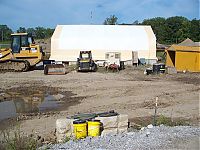
Plum Brook Reactor Facility Decommissioning
Plum Brook Station Sandusky, Ohio
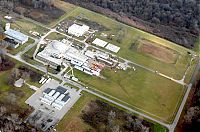
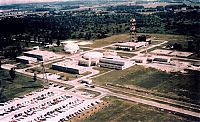
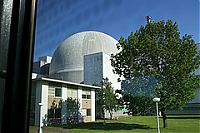
NASA's only nuclear test reactor was the Plum Brook Reactor Facility, which is affiliated with the NASA Glenn Research Center . The facility, located on land that is now Plum Brook Station in Sandusky, Ohio, operated from 1962-1973; but the history of the land stretches back to the 19 th Century when War of 1812 veterans were given the property. The federal government seized 9000 acres of this farmland in 1941 to construct a sprawling Ordnance Works facility that operated throughout World War II.
The National Advisory Committee for Aeronautics purchased the land in 1956 to build a test reactor, to support atomic aircraft studies being conducted by the Atomic Energy Commission. Although that concept was shelved before construction of the reactor was completed, President Kennedy breathed new life into the facility by supporting a national nuclear rocket program in May 1961, a month before the Plum Brook reactor was started up (also known as “taken critical”) for the first time.
During its operations, the 60-megawatt Plum Brook Reactor conducted over 70 experiments, most of which studied the effects of radiation on various materials. After the materials were irradiated in the reactor, they were transferred to the Hot Laboratory where they could be remotely examined, using manipulator arms that reached into a series of seven test cells.
The nation's nuclear rocket program was canceled during the post-Apollo budget cuts. The reactor was closed down in 1973 and was placed into a “safe dry storage” mode, during which it was monitored by NASA until initial decommissioning work began in 1998.
Plum Brook Station Sandusky, Ohio
NASA's only nuclear test reactor was the Plum Brook Reactor Facility, which is affiliated with the NASA Glenn Research Center . The facility, located on land that is now Plum Brook Station in Sandusky, Ohio, operated from 1962-1973; but the history of the land stretches back to the 19 th Century when War of 1812 veterans were given the property. The federal government seized 9000 acres of this farmland in 1941 to construct a sprawling Ordnance Works facility that operated throughout World War II.
The National Advisory Committee for Aeronautics purchased the land in 1956 to build a test reactor, to support atomic aircraft studies being conducted by the Atomic Energy Commission. Although that concept was shelved before construction of the reactor was completed, President Kennedy breathed new life into the facility by supporting a national nuclear rocket program in May 1961, a month before the Plum Brook reactor was started up (also known as “taken critical”) for the first time.
During its operations, the 60-megawatt Plum Brook Reactor conducted over 70 experiments, most of which studied the effects of radiation on various materials. After the materials were irradiated in the reactor, they were transferred to the Hot Laboratory where they could be remotely examined, using manipulator arms that reached into a series of seven test cells.
The nation's nuclear rocket program was canceled during the post-Apollo budget cuts. The reactor was closed down in 1973 and was placed into a “safe dry storage” mode, during which it was monitored by NASA until initial decommissioning work began in 1998.

























76 files on 1 page(s)