
 Home
Home Register
 Login
Login Album list
 Last uploads
 Last comments
 Most viewed
 Top rated
 By date
 My Favorites
 Search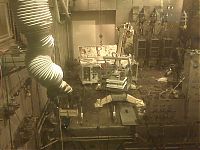
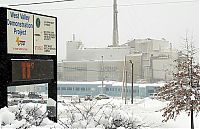
West Valley
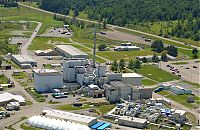
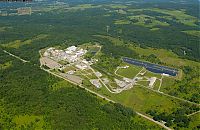
1961 While industrial interests explore the viability of commercial reprocessing, the state of New York moves to acquire land in the town of Ashford, near West Valley, for an atomic industrial area. The state Office of Atomic Development establishes the Western New York Nuclear Service Center (WNYNSC) on the 3,345 acres of land it has taken title to.
1962 Davison Chemical Company establishes Nuclear Fuels Services, Inc. (NFS) as a reprocessing company. It reaches an agreement with the state to lease the WNYNSC.
1966 Nuclear Fuels Services develops and operates 200 acres of the WNYNSC. It operates the site as a nuclear fuel reprocessing center from 1966 to 1972, and accepts radioactive waste for disposal until 1975. During the operation of the plant, 640 metric tons of spent reactor fuel are processed, resulting in 660,000 gallons of highly radioactive liquid waste. The liquid waste is stored in an underground waste tank. NFS also utilizes a 15-acre area for the disposal of radioactive waste from commercial waste generators, and another seven-acre landfill is used to dispose of radioactive waste generated from reprocessing.
1976 Following four years of pursuing modifications to the plant, NFS decides the costs and regulatory requirements of reprocessing make the venture impractical. The company decides to exercise its right to leave the site after its lease expires on December 31, 1980, transferring ownership and responsibility for the waste and facility to the state of New York. The state initiates talks with the Federal Energy Research and Development Administration to sort out ownership of the waste and environmental remediation responsibility.
1980 Congress passes the West Valley Demonstration Project Act, Public Law 96-368, directing the U.S. Department of Energy (DOE) to take the lead role in solidifying the liquid high-level waste and decontaminating and decommissioning the facilities at West Valley.
1962 Davison Chemical Company establishes Nuclear Fuels Services, Inc. (NFS) as a reprocessing company. It reaches an agreement with the state to lease the WNYNSC.
1966 Nuclear Fuels Services develops and operates 200 acres of the WNYNSC. It operates the site as a nuclear fuel reprocessing center from 1966 to 1972, and accepts radioactive waste for disposal until 1975. During the operation of the plant, 640 metric tons of spent reactor fuel are processed, resulting in 660,000 gallons of highly radioactive liquid waste. The liquid waste is stored in an underground waste tank. NFS also utilizes a 15-acre area for the disposal of radioactive waste from commercial waste generators, and another seven-acre landfill is used to dispose of radioactive waste generated from reprocessing.
1976 Following four years of pursuing modifications to the plant, NFS decides the costs and regulatory requirements of reprocessing make the venture impractical. The company decides to exercise its right to leave the site after its lease expires on December 31, 1980, transferring ownership and responsibility for the waste and facility to the state of New York. The state initiates talks with the Federal Energy Research and Development Administration to sort out ownership of the waste and environmental remediation responsibility.
1980 Congress passes the West Valley Demonstration Project Act, Public Law 96-368, directing the U.S. Department of Energy (DOE) to take the lead role in solidifying the liquid high-level waste and decontaminating and decommissioning the facilities at West Valley.
8 files on 1 page(s)