

 Home
Home Register
 Login
Login Album list
 Last uploads
 Last comments
 Most viewed
 Top rated
 By date
 My Favorites
 Search
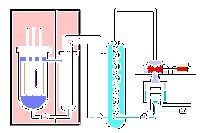
FBR - Fast Breeder Reactor
FBRs have received much research funding but only limited market support. A "commercial" unit still operates in Russia and prototypes exist elsewhere, notably France, Japan, and India. China also intends to build a prototype FBR while India and Russia are building FBRs that might be described as commercial. "Breeder" or "fast" reactors have advantages because U-235 is the only naturally occurring uranium isotope that is directly suitable for commercial energy production. U-235 is only 0.7 percent of natural uranium.7 Most natural uranium is the U-238 isotope that is not directly usable as a reactor fuel. During the course of any reactor’s operation a portion of the U-238 in the fuel is converted to plutonium, primarily the useful Pu-239 isotope, which provides a large portion of the energy used in nuclear power production. The bulk of the U-238 content in a commercial reactor is typically not converted to plutonium nor does it contribute significantly to electricity production. A breeder reactor converts more U-238 to usable fuels than the reactor consumes. Any unused fuel produced by this procedure would have to be "reprocessed" before some of the plutonium and the remaining U-235 and U-238 might again be usable as a reactor fuel. FBRs have, so far, proven to be more expensive to build and operate than LWRs. It is unclear whether this is because most FBRs have been prototypes or if this reflects underlying costs. The plutonium content of the spent and reprocessed fuel also raises concerns over weapons proliferation. Many earliest FBR designs experienced system failures, though some, notably the BN-600 in Russia, have operated reliably over extended periods. Proponents of advanced reactor designs believe that some commercial FBR designs could be deployed prior to other highly advanced, though untested reactor designs
2 files on 1 page(s)