

 Home
Home Register
 Login
Login Album list
 Last uploads
 Last comments
 Most viewed
 Top rated
 By date
 My Favorites
 Search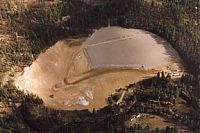
Lowman Mill and Disposal Site
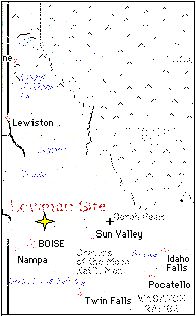
Location: The Lowman mill site is in north-central Boise County, Idaho, about 73 miles northeast of the City of Boise. It is in the Boise National Forest one-half mile northeast of the village of Lowman (on State Road 21).
Background: The Idaho batholith igneous complex extends about 300 miles N-S by 50 to 100 miles E-W in southwestern Idaho. It is comprised mainly of large intrusive bodies of medium to coarse-grained granite, quartz monzonite, and granodiorite. Pegmatite dikes are common in the granites. In this terrain, stream gravels and higher bench gravels contain placer deposits composed primarily of resistant, heavy-mineral grains (black sand) that were released from the batholithic rocks by weathering (decomposition and erosion). Placer deposits that formed in valleys that drain weathered quartz-monzonite outcrops contain a higher percentage of thorium-bearing minerals. These placers were mined for monazite (a thorium-bearing mineral) in the period 1903-1910 and again in the late 1940s. The thoria content of Idaho monazite is reported to be somewhat lower than other available commercial monazite concentrate. In the Bear Valley drainage of southern Valley County, Idaho, some placers contain monazite along with uranium-bearing mineral grain. These placers were mined for uranium, thorium, and rare earths from 1955 to1960. Common heavy mineral grains in the placers are ilmenite, magnetite, and garnet with lesser amounts of the uranium- and rare-earth minerals columbite, euxenite, and monazite and minor amounts of other opaque, radioactive, rare-earth minerals. The valley-fill sequence that contains these placer deposits consists of several layers of fine to coarse sand, clay, and gravel. The sequence averages less than 50 feet in thickness, though thicknesses of up to about 100 feet are reported.
The extent of the radioactive heavy-mineral placer deposits in Bear Valley was studied in a Government sponsored drilled program in the 1950s. The results indicated that while the placer deposits contain substantial tonnages of the uranium-bearing minerals, the mineral content of the placer deposits varies strongly and some contain relatively low amounts of uranium-bearing mineral grains. Most of the Bear Valley placer deposits sampled were found to contain generally low amounts of residual euxenite grains, making most non-commercial at that time.
At one locality in upper Bear Valley in the late 1950s, placers that contained euxenite as the predominant radioactive mineral were mined for uranium, rare earths, and associated heavy-mineral products. The mining operations consisted of dredging and jigging the raw placer material to wash and mechanically separate out the valued heavy-mineral black-sand fraction. About 8,500 cubic yards of stream gravels per day were recovered using two dredges. The amount of black-sand concentrate recovered per cubic yard of dredged raw gravel ranged between 45 to 140 pounds. The black-sand jig concentrate was transported to the Lowman mill site for further upgrading.
Background: The Idaho batholith igneous complex extends about 300 miles N-S by 50 to 100 miles E-W in southwestern Idaho. It is comprised mainly of large intrusive bodies of medium to coarse-grained granite, quartz monzonite, and granodiorite. Pegmatite dikes are common in the granites. In this terrain, stream gravels and higher bench gravels contain placer deposits composed primarily of resistant, heavy-mineral grains (black sand) that were released from the batholithic rocks by weathering (decomposition and erosion). Placer deposits that formed in valleys that drain weathered quartz-monzonite outcrops contain a higher percentage of thorium-bearing minerals. These placers were mined for monazite (a thorium-bearing mineral) in the period 1903-1910 and again in the late 1940s. The thoria content of Idaho monazite is reported to be somewhat lower than other available commercial monazite concentrate. In the Bear Valley drainage of southern Valley County, Idaho, some placers contain monazite along with uranium-bearing mineral grain. These placers were mined for uranium, thorium, and rare earths from 1955 to1960. Common heavy mineral grains in the placers are ilmenite, magnetite, and garnet with lesser amounts of the uranium- and rare-earth minerals columbite, euxenite, and monazite and minor amounts of other opaque, radioactive, rare-earth minerals. The valley-fill sequence that contains these placer deposits consists of several layers of fine to coarse sand, clay, and gravel. The sequence averages less than 50 feet in thickness, though thicknesses of up to about 100 feet are reported.
The extent of the radioactive heavy-mineral placer deposits in Bear Valley was studied in a Government sponsored drilled program in the 1950s. The results indicated that while the placer deposits contain substantial tonnages of the uranium-bearing minerals, the mineral content of the placer deposits varies strongly and some contain relatively low amounts of uranium-bearing mineral grains. Most of the Bear Valley placer deposits sampled were found to contain generally low amounts of residual euxenite grains, making most non-commercial at that time.
At one locality in upper Bear Valley in the late 1950s, placers that contained euxenite as the predominant radioactive mineral were mined for uranium, rare earths, and associated heavy-mineral products. The mining operations consisted of dredging and jigging the raw placer material to wash and mechanically separate out the valued heavy-mineral black-sand fraction. About 8,500 cubic yards of stream gravels per day were recovered using two dredges. The amount of black-sand concentrate recovered per cubic yard of dredged raw gravel ranged between 45 to 140 pounds. The black-sand jig concentrate was transported to the Lowman mill site for further upgrading.
2 files on 1 page(s)