

 Home
Home Register
 Login
Login Album list
 Last uploads
 Last comments
 Most viewed
 Top rated
 By date
 My Favorites
 Search
Edgemont Mill
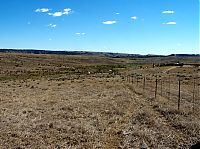
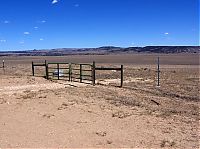
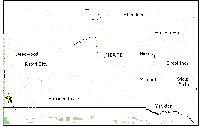
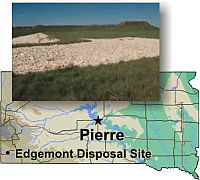
Location: The former mill site mill is located immediately east of Edgemont, Fall River County in southwestern South Dakota.
Background: Sandstone-type uranium ores were discovered in the Black Hills area north of Edgemont, South Dakota, in mid 1951 and north of Carlile, Wyoming, in early 1952. Exploration by the Government and private firms developed sufficient ore reserves by 1955 to justify a mill. Mines Development, Inc. (MDI), began construction of the uranium mill in 1955 on a site adjacent to an ore buying station operated by the U.S. Atomic Energy Commission (AEC). At startup in July 1956, the mill’s initial throughput capacity was 250 tons of ore per day (TPD); this was increased to 500 TPD by mid 1957. In early 1955, MDI had contracted to produce uranium for the AEC, and the mill supplied uranium under additional contracts through December 1968. In July 1956, MDI purchased the AEC ore buying station with its accumulated stockpile of uranium ore. From 1956 to 1960, the mill did not recover vanadium (from the carnotite-type ore), and vanadium slime tailings from the mill were impounded in a pond separate from the mill’s coarse tailings pond. In 1960 and afterward, MDI recovered both uranium and vanadium. Recovery of other metals at the mill was unimportant. During the period of AEC deliveries, about 500 TPD of ore averaging 0.20 percent U3O8 was processed, and the total of ore treated was more than 1.6 million tons. About 99 percent of the uranium production in that period was purchased by the Government. All of the vanadium production was sold in the commercial market. From 1969 to 1974, the mill produced uranium and vanadium for commercial market sales. The old vanadium slime tailings also were reprocessed beginning in 1972 for their vanadium values. In mid 1974, the Tennessee Valley Authority (TVA) acquired the mill site and plant from Susquehanna-Western, Inc., parent firm of MDI, along with rights to several uranium properties. TVA, based on economic and other factors, decided to not restart the mill. It permanently closed the mill in August 1974.
Ore feed for the mill, which operated mainly as a “custom” mill, came largely from independently operated mines in the Black Hills area of South Dakota and Wyoming. Carnotite-type ores (shallower, oxidized zone) and uraninite-coffinite ores (deeper, reduced zone), were the primary uranium minerals. In the early years, some ore was shipped from mines in the Powder River Basin area of Wyoming and from Washington State, and uraniferous ash from open-field burning of lignite ore was also fed to the mill. At first, the burning of lignite ore was done in the mining area near Slim Buttes, South Dakota. Later, stockpiled lignite ore was shipped to the Edgemont mill site and burned there in linear heap piles.
Background: Sandstone-type uranium ores were discovered in the Black Hills area north of Edgemont, South Dakota, in mid 1951 and north of Carlile, Wyoming, in early 1952. Exploration by the Government and private firms developed sufficient ore reserves by 1955 to justify a mill. Mines Development, Inc. (MDI), began construction of the uranium mill in 1955 on a site adjacent to an ore buying station operated by the U.S. Atomic Energy Commission (AEC). At startup in July 1956, the mill’s initial throughput capacity was 250 tons of ore per day (TPD); this was increased to 500 TPD by mid 1957. In early 1955, MDI had contracted to produce uranium for the AEC, and the mill supplied uranium under additional contracts through December 1968. In July 1956, MDI purchased the AEC ore buying station with its accumulated stockpile of uranium ore. From 1956 to 1960, the mill did not recover vanadium (from the carnotite-type ore), and vanadium slime tailings from the mill were impounded in a pond separate from the mill’s coarse tailings pond. In 1960 and afterward, MDI recovered both uranium and vanadium. Recovery of other metals at the mill was unimportant. During the period of AEC deliveries, about 500 TPD of ore averaging 0.20 percent U3O8 was processed, and the total of ore treated was more than 1.6 million tons. About 99 percent of the uranium production in that period was purchased by the Government. All of the vanadium production was sold in the commercial market. From 1969 to 1974, the mill produced uranium and vanadium for commercial market sales. The old vanadium slime tailings also were reprocessed beginning in 1972 for their vanadium values. In mid 1974, the Tennessee Valley Authority (TVA) acquired the mill site and plant from Susquehanna-Western, Inc., parent firm of MDI, along with rights to several uranium properties. TVA, based on economic and other factors, decided to not restart the mill. It permanently closed the mill in August 1974.
Ore feed for the mill, which operated mainly as a “custom” mill, came largely from independently operated mines in the Black Hills area of South Dakota and Wyoming. Carnotite-type ores (shallower, oxidized zone) and uraninite-coffinite ores (deeper, reduced zone), were the primary uranium minerals. In the early years, some ore was shipped from mines in the Powder River Basin area of Wyoming and from Washington State, and uraniferous ash from open-field burning of lignite ore was also fed to the mill. At first, the burning of lignite ore was done in the mining area near Slim Buttes, South Dakota. Later, stockpiled lignite ore was shipped to the Edgemont mill site and burned there in linear heap piles.

10 files on 1 page(s)