

 Home
Home Register
 Login
Login Album list
 Last uploads
 Last comments
 Most viewed
 Top rated
 By date
 My Favorites
 Search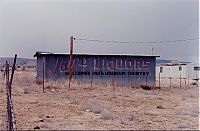
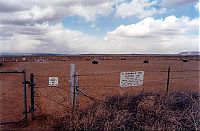
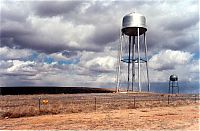
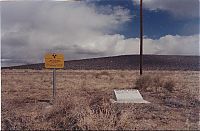
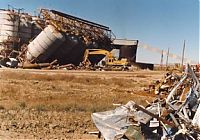
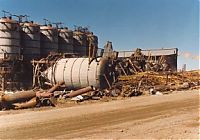
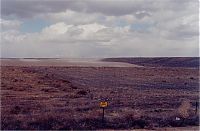
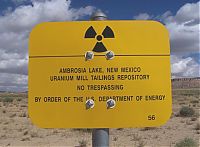
Ambrosia Lake (Phillips Petroleum) Mill
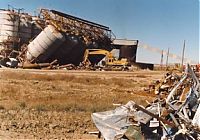
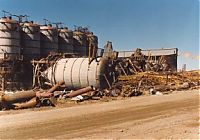
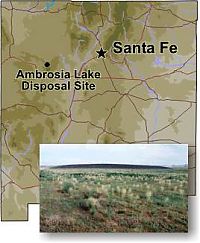
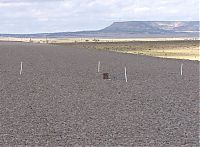
Location: The Phillips mill site is located in the Ambrosia Lake Valley about 25 miles north of Grants, New Mexico. It is one of two uranium mills that were operated in the valley. A total of five mills were built between December 1956 and December 1959 in the Ambrosia Lake district of the uranium mining area known as the Grants mineral belt, which extends from near Albuquerque, New Mexico, westward for about 100 miles across the southern margin of the San Juan Basin.
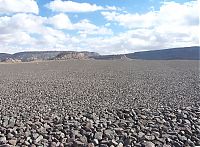
Background: Phillips Petroleum Company began construction of the mill in 1957, and it entered operation in mid 1958. The company had signed a contract with the U.S. Atomic Energy Commission (AEC) in September 1957 for a mill at Grants, New Mexico. The original mill site covered about 200 acres. Over time, about 570 additional acres were impacted by the spreading of radioactively contaminated debris from the mill tailings pile by wind and rainwater erosion. A conventional alkaline leach process was used at the mill from June 1958 to April 1963. During its operating years, the mill processed about 1,800 tons of ore per day that averaged 0.23 percent U3O8, and generated some 3 million tons of tailings. Ore for the mill came mainly from underground mines in the Ambrosia Lake district. United Nuclear Fuels Corporation (UNC) purchased the Phillips mill and uranium mine properties in February 1963, and the AEC uranium procurement contract with Phillips was transferred to UNC. In March 1963, ore processing at the Phillips mill was ended and the mill was closed by mid year. In June 1995, UNC arranged for toll milling of its ore at the nearby Homestake-Sapin mill in which UNC was a limited partner. About 400,000 tons of tailings materials from the Phillips mill site were eventually used by UNC for backfilling mines, and in early 1981 about 2.6 million tons of tailings-pile materials remained at the mill site. The tailings lie on unconsolidated valley fill material. A thick, impervious shale formation separates the tailings from the confined groundwater aquifers. Contamination of the aquifers by the tailings material is highly unlikely. The Phillips mill did not operate after March 1963, though it was maintained on a stand-by basis. From the mid 1970s until the Phillips mill site was permanently closed in 1982, a resin ion exchange (IX) plant to recover uranium from waste mine water was operated in the main mill building. This operation did not increase the size of the tailings pile stored at the mill site. The IX product was treated at the nearby United Nuclear-Homestake uranium mill at Grants, New Mexico.
Background: Phillips Petroleum Company began construction of the mill in 1957, and it entered operation in mid 1958. The company had signed a contract with the U.S. Atomic Energy Commission (AEC) in September 1957 for a mill at Grants, New Mexico. The original mill site covered about 200 acres. Over time, about 570 additional acres were impacted by the spreading of radioactively contaminated debris from the mill tailings pile by wind and rainwater erosion. A conventional alkaline leach process was used at the mill from June 1958 to April 1963. During its operating years, the mill processed about 1,800 tons of ore per day that averaged 0.23 percent U3O8, and generated some 3 million tons of tailings. Ore for the mill came mainly from underground mines in the Ambrosia Lake district. United Nuclear Fuels Corporation (UNC) purchased the Phillips mill and uranium mine properties in February 1963, and the AEC uranium procurement contract with Phillips was transferred to UNC. In March 1963, ore processing at the Phillips mill was ended and the mill was closed by mid year. In June 1995, UNC arranged for toll milling of its ore at the nearby Homestake-Sapin mill in which UNC was a limited partner. About 400,000 tons of tailings materials from the Phillips mill site were eventually used by UNC for backfilling mines, and in early 1981 about 2.6 million tons of tailings-pile materials remained at the mill site. The tailings lie on unconsolidated valley fill material. A thick, impervious shale formation separates the tailings from the confined groundwater aquifers. Contamination of the aquifers by the tailings material is highly unlikely. The Phillips mill did not operate after March 1963, though it was maintained on a stand-by basis. From the mid 1970s until the Phillips mill site was permanently closed in 1982, a resin ion exchange (IX) plant to recover uranium from waste mine water was operated in the main mill building. This operation did not increase the size of the tailings pile stored at the mill site. The IX product was treated at the nearby United Nuclear-Homestake uranium mill at Grants, New Mexico.

16 files on 1 page(s)