

 Home
Home Register
 Login
Login Album list
 Last uploads
 Last comments
 Most viewed
 Top rated
 By date
 My Favorites
 Search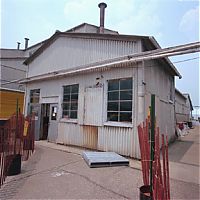
Falls City Mill & Disposal Site
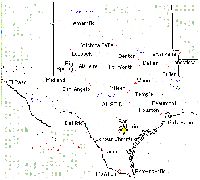
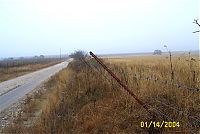
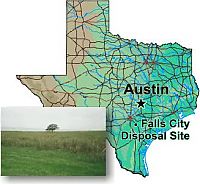
Location: The mill site is located about 8 miles southwest of Falls City in Karnes County, Texas.
Background: Uranium discoveries were made in southwestern Karnes County, Texas, in 1954-55. The early finds, shallow small deposits behind sandstone outcrops, were too small to support the long haulage distance to the nearest mill in northwestern New Mexico. From January 1960 to May 1961, the U.S. Atomic Energy Commission (AEC) operated a uranium-ore buying station in western Karnes County near the uranium deposits and it stockpiled some 111,000 tons of ore that assayed 0.19 percent U3O8. In July 1960, Susquehanna-Western, Inc., (SWI) entered into a contract to produce uranium for sale to the AEC, and these sales continued over the period 1960-1968 under two such contracts. SWI began construction in 1960 of a sulfuric acid leach mill on a site that originally covered about 1,600 acres. The mill was placed in operation in April 1961 with an initial capacity of 220 tons of ore per day (TPD) throughput, and it was expanded by 1969 to 1,000 TPD. Mill feed came largely from company-owned mines developed in ore deposits located relatively near the mill site in the central coastal plain area in south Texas. Over the period 1961-1964, all the ore that had been purchased at the AEC’s ore-buying station was sold to SWI for processing at the Falls City mill. A total of about 1.2 million tons of ore that averaged 0.19 percent U3O8 was processed during the period of AEC contracts (1961-1968). About 95 percent of the uranium was recovered from the ore. Of the uranium concentrate produced in those years, 31 percent was sold to the AEC and 61 percent was sold commercially. After expiration of the AEC contracts, the mill continued to produce uranium for commercial sales until it was closed in 1973. In the late 1970s, Solution Engineering, Inc., acquired about 200 acres of the Falls City mill site, including the mill and four of the nearby tailings piles. Between 1978-1982, Solution Engineering, under a license from the State of Texas, used a solution mining process to produce a relatively small quantity of uranium concentrate from the in-place tailings piles.
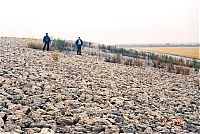
When milling of uranium ore was ended in 1973, the mill tailings were stored in 7 impoundments: there were 6 tailings piles (four were located in unlined mined-out pits) and one pond contaminated with tailings and mill residues. These covered an area of about 146 acres on the original mill site. In 1982, the pond liquids were evaporated and all the tailings piles were stabilized by a 1.5-foot thick earthen cap that was seeded to establish an erosion-resistant vegetative cover.
Background: Uranium discoveries were made in southwestern Karnes County, Texas, in 1954-55. The early finds, shallow small deposits behind sandstone outcrops, were too small to support the long haulage distance to the nearest mill in northwestern New Mexico. From January 1960 to May 1961, the U.S. Atomic Energy Commission (AEC) operated a uranium-ore buying station in western Karnes County near the uranium deposits and it stockpiled some 111,000 tons of ore that assayed 0.19 percent U3O8. In July 1960, Susquehanna-Western, Inc., (SWI) entered into a contract to produce uranium for sale to the AEC, and these sales continued over the period 1960-1968 under two such contracts. SWI began construction in 1960 of a sulfuric acid leach mill on a site that originally covered about 1,600 acres. The mill was placed in operation in April 1961 with an initial capacity of 220 tons of ore per day (TPD) throughput, and it was expanded by 1969 to 1,000 TPD. Mill feed came largely from company-owned mines developed in ore deposits located relatively near the mill site in the central coastal plain area in south Texas. Over the period 1961-1964, all the ore that had been purchased at the AEC’s ore-buying station was sold to SWI for processing at the Falls City mill. A total of about 1.2 million tons of ore that averaged 0.19 percent U3O8 was processed during the period of AEC contracts (1961-1968). About 95 percent of the uranium was recovered from the ore. Of the uranium concentrate produced in those years, 31 percent was sold to the AEC and 61 percent was sold commercially. After expiration of the AEC contracts, the mill continued to produce uranium for commercial sales until it was closed in 1973. In the late 1970s, Solution Engineering, Inc., acquired about 200 acres of the Falls City mill site, including the mill and four of the nearby tailings piles. Between 1978-1982, Solution Engineering, under a license from the State of Texas, used a solution mining process to produce a relatively small quantity of uranium concentrate from the in-place tailings piles.
When milling of uranium ore was ended in 1973, the mill tailings were stored in 7 impoundments: there were 6 tailings piles (four were located in unlined mined-out pits) and one pond contaminated with tailings and mill residues. These covered an area of about 146 acres on the original mill site. In 1982, the pond liquids were evaporated and all the tailings piles were stabilized by a 1.5-foot thick earthen cap that was seeded to establish an erosion-resistant vegetative cover.

7 files on 1 page(s)