

 Home
Home Register
 Login
Login Album list
 Last uploads
 Last comments
 Most viewed
 Top rated
 By date
 My Favorites
 Search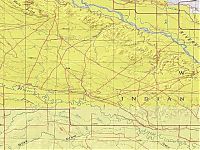
Riverton Mill
Location: The site of the former Riverton uranium-vanadium ore processing mill is located about one mile southwest of the city of Riverton, Fremont County, Wyoming. The mill site and tailings pile were situated on privately owned land that is located within the boundaries of the Wind River Indian Reservation.
Background: The Wyoming Basins region is a part of the Rocky Mountain province and consists geologically of high mountain ranges separated by synclinal basins that form broad valleys between the ranges. Most of the uranium deposits in the Wyoming basins are hosted by sedimentary rocks of Tertiary age. The mountain ranges are mainly breached anticlinal structures where Precambrian granitic-rock cores were exposed by erosion during the waning stages of the Laramide orogeny.
Uranium occurrences are widely scattered across the region. During World War I, uranium ore was mined for radium from a vein deposit at the Silver Cliff mine in the Hartville uplift area near Lusk, Wyoming. Though other deposits were reportedly known in the region, none was exploited before the mid 1950s. In 1951 while conducting field work, J. D. Love, U.S. Geological Survey, discovered uranium minerals on outcrops near the Pumpkin Buttes area of the Powder River Basin, Wyoming. In 1953, Neil McNiece, prospecting along the Beaver Rim in the Gas Hills area east of Riverton, Wyoming, found uranium on outcrops of the Wind River Formation (early Eocene) above the Lucky Mc claims. These developments kindled further exploration efforts that soon led to other discoveries. Subsequent airborne radiometric surveys by the U.S. Atomic Energy Commission (AEC) and follow-on surface drilling by private industry resulted in the discovery and development of ore deposits in the Gas Hills district. Exploration rapidly spread to areas in other basins, and by 1954 uranium occurrences had been found in all areas of the Wyoming Basins region. By 1956, the deeper-lying, large unoxidized uranium ore deposits had been discovered in the central Gas Hills area in the coarse arkosic sandstone and conglomerate beds in the upper part of the Wind River Formation. Of the 70 mine properties that had been developed in the district through 1990, 16 had each produced more than one million pounds of U3O8 and six properties had each produced more than one million tons of ore. The Gas Hills district is located along the south central edge of the Wind River Basin near the northern border of the Granite Mountains-Sweetwater Arch.
Uranium was discovered in the Big Pryor Mountains area of southern Montana in September 1955 and in the Little Mountain area of Wyoming in early 1956. The deposits occur in the Madison Limestone (Missippian age) which in the upper 200 feet contains an extensive system of solution caverns. Some caves are filled with insoluble breccia and silty debris. Locally, the cave-filling and permeable zones within the limestone contain uranium and vanadium mineralization. The caves vary widely in size and most are barren. Ore produced from 20 mines averaged 0.36 percent U3O8 and 0.38 percent V2O5. The median mine yield was about 250 tons of ore, but two mines produced more than 5,000 tons of ore. The ore's erratic character, excessive distance to the closest mill, milling penalties due to the ore's high lime content (usually above 70 percent CaCO3), and the declining grades of mined ore over time caused operations to close by 1966.
In November 1954, the U.S. Atomic Energy Commission (AEC) leased a site southwest of Riverton, Wyoming, from the Chicago & North Western Railway Company for a uranium-ore buying station. AEC operated the buying station from March 1, 1955, to late 1957. Some 152,700 tons of ore averaging 0.23 percent U3O8 were purchased and stockpiled at the site during that period.
In December 1957, the AEC entered into a contract for the purchase of uranium concentrate from a mill at Riverton, Wyoming. The initial contract was with Fremont Minerals, Inc., a subsidiary of Susquehanna-Western, Inc. (SWI). In January 1961 the Fremont contract was replaced when the AEC and SWI entered a new contract for which the term extended through December 31, 1966, with final concentrate deliveries scheduled February 1967. The prime purpose of the Riverton mill was to provide a market for ore and uranium from the increasing number of uranium mining operations then emerging in the Gas Hills, Pryor-Little Mountains, and Wind River Basin areas. Most of the ore treated at the Riverton mill, which was operated as a "custom" mill from November 1958 until May 1963, came from mines in the Gas Hills area. After the mill was shut down in June 1963, SWI shipped uranium ore from company mines and ore purchased from independent miners to the Federal-American Partners' uranium mill in the Gas Hills district. The AEC continued until July 1965 to purchase the uranium concentrate produced under the SWI-Federal toll-milling arrangement.
Background: The Wyoming Basins region is a part of the Rocky Mountain province and consists geologically of high mountain ranges separated by synclinal basins that form broad valleys between the ranges. Most of the uranium deposits in the Wyoming basins are hosted by sedimentary rocks of Tertiary age. The mountain ranges are mainly breached anticlinal structures where Precambrian granitic-rock cores were exposed by erosion during the waning stages of the Laramide orogeny.
Uranium occurrences are widely scattered across the region. During World War I, uranium ore was mined for radium from a vein deposit at the Silver Cliff mine in the Hartville uplift area near Lusk, Wyoming. Though other deposits were reportedly known in the region, none was exploited before the mid 1950s. In 1951 while conducting field work, J. D. Love, U.S. Geological Survey, discovered uranium minerals on outcrops near the Pumpkin Buttes area of the Powder River Basin, Wyoming. In 1953, Neil McNiece, prospecting along the Beaver Rim in the Gas Hills area east of Riverton, Wyoming, found uranium on outcrops of the Wind River Formation (early Eocene) above the Lucky Mc claims. These developments kindled further exploration efforts that soon led to other discoveries. Subsequent airborne radiometric surveys by the U.S. Atomic Energy Commission (AEC) and follow-on surface drilling by private industry resulted in the discovery and development of ore deposits in the Gas Hills district. Exploration rapidly spread to areas in other basins, and by 1954 uranium occurrences had been found in all areas of the Wyoming Basins region. By 1956, the deeper-lying, large unoxidized uranium ore deposits had been discovered in the central Gas Hills area in the coarse arkosic sandstone and conglomerate beds in the upper part of the Wind River Formation. Of the 70 mine properties that had been developed in the district through 1990, 16 had each produced more than one million pounds of U3O8 and six properties had each produced more than one million tons of ore. The Gas Hills district is located along the south central edge of the Wind River Basin near the northern border of the Granite Mountains-Sweetwater Arch.
Uranium was discovered in the Big Pryor Mountains area of southern Montana in September 1955 and in the Little Mountain area of Wyoming in early 1956. The deposits occur in the Madison Limestone (Missippian age) which in the upper 200 feet contains an extensive system of solution caverns. Some caves are filled with insoluble breccia and silty debris. Locally, the cave-filling and permeable zones within the limestone contain uranium and vanadium mineralization. The caves vary widely in size and most are barren. Ore produced from 20 mines averaged 0.36 percent U3O8 and 0.38 percent V2O5. The median mine yield was about 250 tons of ore, but two mines produced more than 5,000 tons of ore. The ore's erratic character, excessive distance to the closest mill, milling penalties due to the ore's high lime content (usually above 70 percent CaCO3), and the declining grades of mined ore over time caused operations to close by 1966.
In November 1954, the U.S. Atomic Energy Commission (AEC) leased a site southwest of Riverton, Wyoming, from the Chicago & North Western Railway Company for a uranium-ore buying station. AEC operated the buying station from March 1, 1955, to late 1957. Some 152,700 tons of ore averaging 0.23 percent U3O8 were purchased and stockpiled at the site during that period.
In December 1957, the AEC entered into a contract for the purchase of uranium concentrate from a mill at Riverton, Wyoming. The initial contract was with Fremont Minerals, Inc., a subsidiary of Susquehanna-Western, Inc. (SWI). In January 1961 the Fremont contract was replaced when the AEC and SWI entered a new contract for which the term extended through December 31, 1966, with final concentrate deliveries scheduled February 1967. The prime purpose of the Riverton mill was to provide a market for ore and uranium from the increasing number of uranium mining operations then emerging in the Gas Hills, Pryor-Little Mountains, and Wind River Basin areas. Most of the ore treated at the Riverton mill, which was operated as a "custom" mill from November 1958 until May 1963, came from mines in the Gas Hills area. After the mill was shut down in June 1963, SWI shipped uranium ore from company mines and ore purchased from independent miners to the Federal-American Partners' uranium mill in the Gas Hills district. The AEC continued until July 1965 to purchase the uranium concentrate produced under the SWI-Federal toll-milling arrangement.

2 files on 1 page(s)