

 Home
Home Register
 Login
Login Album list
 Last uploads
 Last comments
 Most viewed
 Top rated
 By date
 My Favorites
 Search
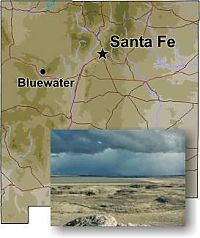
Bluewater, New Mexico
Uranium ore was processed at Bluewater, New Mexico,
from 1953 to 1982. These operations created processrelated
waste and tailings, a sandlike waste product
containing radioactive materials and other contaminants.
ARCO Coal Company (ARCO), the site licensee,
completed encapsulation of the tailings in two large
engineered disposal cells in 1995.
The U.S. Nuclear Regulatory Commission included the
Bluewater Disposal Cell under general license in 1997.
DOE is responsible, under the general license, for the
long-term custody, monitoring, and maintenance of the
site. The DOE Long-Term Surveillance and Maintenance
(LTSM) Program at the DOE Grand Junction (Colorado)
Office is responsible for the long-term safety and
integrity of the disposal site.
In 1988, DOE established the LTSM Program to provide
stewardship of disposal cells that contain low-level
radioactive material after completion of environmental
restoration activities. The mission of the LTSM Program
is to ensure that the disposal cells continue to prevent
release of contaminated materials to the environment.
These materials will remain potentially hazardous for
thousands of years. As long as the cells function as
designed, risks to human health and the environment
are negligible.
The LTSM Program maintains the safety and integrity
of the disposal cell through periodic monitoring,
inspections, and maintenance; serves as a point of
contact for stakeholders; and maintains an information
repository at the DOE Grand Junction Office for all sites
in the LTSM Program.
from 1953 to 1982. These operations created processrelated
waste and tailings, a sandlike waste product
containing radioactive materials and other contaminants.
ARCO Coal Company (ARCO), the site licensee,
completed encapsulation of the tailings in two large
engineered disposal cells in 1995.
The U.S. Nuclear Regulatory Commission included the
Bluewater Disposal Cell under general license in 1997.
DOE is responsible, under the general license, for the
long-term custody, monitoring, and maintenance of the
site. The DOE Long-Term Surveillance and Maintenance
(LTSM) Program at the DOE Grand Junction (Colorado)
Office is responsible for the long-term safety and
integrity of the disposal site.
In 1988, DOE established the LTSM Program to provide
stewardship of disposal cells that contain low-level
radioactive material after completion of environmental
restoration activities. The mission of the LTSM Program
is to ensure that the disposal cells continue to prevent
release of contaminated materials to the environment.
These materials will remain potentially hazardous for
thousands of years. As long as the cells function as
designed, risks to human health and the environment
are negligible.
The LTSM Program maintains the safety and integrity
of the disposal cell through periodic monitoring,
inspections, and maintenance; serves as a point of
contact for stakeholders; and maintains an information
repository at the DOE Grand Junction Office for all sites
in the LTSM Program.
2 files on 1 page(s)