

 Home
Home Register
 Login
Login Album list
 Last uploads
 Last comments
 Most viewed
 Top rated
 By date
 My Favorites
 Search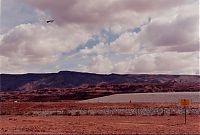
Mexican Hat Mill
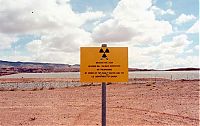
Location: The former Mexican Hat uranium mill site is located on Navajo Nation land 1.5 miles southwest of Mexican Hat, San Juan County, Utah. The site is northeast of the town of Halchita, Utah, which began as the housing area for the mill's employees.
Background: Radioactive mineral deposits in the Triassic rocks of the Colorado Plateau area of Utah were first worked during the early 1900s. In 1912, a high grade vanadium-uranium deposit was mined in the Temple Mountain area of Emery County, Utah. During World War I, high grade uranium ore was mined for radium from deposits in the Chinle Formation (Moss Back Member) at Temple Mountain. Over the period 1920-1940, the U.S. Geological Survey conducted a field reconnaissance and mapping project to evaluate the oil and gas potential in a broad area of eastern Utah and northeastern Arizona. In that study, uranium, vanadium, and copper minerals in Triassic rocks were noted in many places throughout the region, especially near the unconformable contact between the Moenkopi Formation (Early and Middle(?) Triassic age) and the Chinle Formation (Late Triassic age).
From the early 1930s through 1945, several radioactive deposits in the region were mined principally for vanadium. The large vanadium-uranium deposit (discovered in 1921) in the Monument Valley area of northeastern Arizona was mined for vanadium in 1942. In about 1944, a few carloads of copper-uranium ore were mined from the Happy Jack mine in the White Canyon district and shipped to the Garfield smelter in Salt Lake County, Utah. From 1949-1953, the Vanadium Corporation of America operated a small mill near Hite, Utah, to process uranium ore from the White Canyon area (see the White Canyon Mill page). From the late 1940s through the 1980s, about 130 uranium mines were developed on the uranium deposits in the White Canyon-Red Canyon district. Most yielded less than 10,000 tons of ore, but four deposits contained more than 100,000 tons and one contained more than 600,000 tons of ore.
The White Canyon-Red Canyon uranium district in southwestern San Juan County lies along the western flank and crest of the Monument Upwarp, an uplifted region where sedimentary rocks of Permian to Jurassic age are exposed in the major stream canyons that formed along the upwarp‘s axis. In the district, which is about 40 miles long by 20 miles wide, uranium-bearing strata are present in the Shinarump Member, the basal Chinle Formation. Most of the minable uranium deposits in the Triassic rocks occur stratigraphically near the Moenkopi-Chinle unconformity. The uranium ore deposits are irregularly distributed and occur in Shinarump sandstone and conglomeratic strata that fill stream channels and scours that were eroded in Middle Triassic time into the underlying sandstone-siltstone strata of the Moenkopi Formation. Shinarump channels locally are deep and some cut through the Moenkopi and into the underlying Permian strata. Uranium present in the uppermost Moenkopi strata was locally mined where contiguous ore was present in overlying Chinle rocks. The ore deposits are generally tabular in shape and elongated with the trend of the hosting paleochannel strata. In most uranium deposits, the grade of the mineralization varies strongly over short distances, and adjacent deposits within the same channel commonly are separated by barren rock. The ore grade in mined deposits averaged between 0.20 and 0.30 percent U3O8, with some deposits also containing up to 2 percent V2O5 and other deposits up to 2 percent copper.
In July 1954, the U.S. Atomic Energy Commission (AEC) announced it would open a uranium ore-buying station in the White Canyon area of Utah near the Happy Jack mine. The station was opened in August 1954, and through July 1957 about 180,000 tons of ore containing some 916,000 pounds of U3O8 were purchased by the AEC and stockpiled at the buying station.
On July 17, 1956, the AEC contracted with Texas-Zinc Minerals Corporation for a mill to produce uranium concentrate through March 31, 1963. Texas-Zinc Minerals selected a mill site located on land belonging to the Navajo Nation, and the firm acquired a lease for the site and built the Mexican Hat mill. The mill opened in November 1957 with an initial capacity of 775 tons of ore per day (TPD). In 1958, the mill's throughput capacity was increased to 1,000 TPD. In August 1958 the AEC contract was modified to extend the final concentrate delivery term to February 1967. The modified contract also provided for the sale to Texas-Zinc of the AEC's stockpile of uranium ore at the White Canyon ore buying station. In June 1963, the mill and mill-site lease were acquired by the Atlas Corporation. Texas-Zinc's contract with AEC was terminated, and uranium concentrate remaining to be delivered to AEC was consolidated into the AEC-Atlas contract under which Atlas was operating its Moab, Utah, uranium mill. AZ Minerals, the new Atlas subsidiary, took over and continued to operate the Mexican Hat mill. From 1953-1965, the mill processed nearly 2.2 million tons of ore that averaged 0.28 percent U3O8. Mill feed came from independent ore producers (65 percent), mines controlled by Texas-Zinc and Atlas (25 percent), and from the purchased AEC stockpile (10 percent)1. The mill ceased operations in February 1965. Over its operating life, the mill achieved an average ore processing rate of 850 TPD and an average uranium recovery rate of more than 93 percent. All uranium production, about 11.4 million pounds U3O8, was delivered to the AEC. The mill was closed in early 1965. An on-site sulfuric acid plant that had supplied acid for the milling operation continued to be operated until 1970. When the mill-site lease expired in 1970, control of the mill site, including its buildings and tailings piles, reverted to the Navajo Nation.
The ore processed at the Mexican Hat mill contained sulfide copper and other sulfide minerals. Froth flotation was used to recover copper minerals from the finely ground ore fed to the mill. Flotation concentrates and tailings were separately acid leached. Leached copper concentrates were then filtered to obtain the final copper product. The copper-leach filtrate was combined with the main-circuit-leached tailings slurry (containing the bulk of uranium in solution). This uranium-pregnant liquor was separated from the leach solids by countercurrent decantation, and the liquor was clarified by pressure filtration. Uranium was recovered in a solvent extraction circuit that used centrifugal contactors. The final uranium oxide product was precipitated by neutralization of the ammonium nitrate strip solution with magnesium hydroxide. The uranium precipitate was thickened, washed, dried, and packed. The mill's copper-concentrate product was shipped to a smelter for processing.
Background: Radioactive mineral deposits in the Triassic rocks of the Colorado Plateau area of Utah were first worked during the early 1900s. In 1912, a high grade vanadium-uranium deposit was mined in the Temple Mountain area of Emery County, Utah. During World War I, high grade uranium ore was mined for radium from deposits in the Chinle Formation (Moss Back Member) at Temple Mountain. Over the period 1920-1940, the U.S. Geological Survey conducted a field reconnaissance and mapping project to evaluate the oil and gas potential in a broad area of eastern Utah and northeastern Arizona. In that study, uranium, vanadium, and copper minerals in Triassic rocks were noted in many places throughout the region, especially near the unconformable contact between the Moenkopi Formation (Early and Middle(?) Triassic age) and the Chinle Formation (Late Triassic age).
From the early 1930s through 1945, several radioactive deposits in the region were mined principally for vanadium. The large vanadium-uranium deposit (discovered in 1921) in the Monument Valley area of northeastern Arizona was mined for vanadium in 1942. In about 1944, a few carloads of copper-uranium ore were mined from the Happy Jack mine in the White Canyon district and shipped to the Garfield smelter in Salt Lake County, Utah. From 1949-1953, the Vanadium Corporation of America operated a small mill near Hite, Utah, to process uranium ore from the White Canyon area (see the White Canyon Mill page). From the late 1940s through the 1980s, about 130 uranium mines were developed on the uranium deposits in the White Canyon-Red Canyon district. Most yielded less than 10,000 tons of ore, but four deposits contained more than 100,000 tons and one contained more than 600,000 tons of ore.
The White Canyon-Red Canyon uranium district in southwestern San Juan County lies along the western flank and crest of the Monument Upwarp, an uplifted region where sedimentary rocks of Permian to Jurassic age are exposed in the major stream canyons that formed along the upwarp‘s axis. In the district, which is about 40 miles long by 20 miles wide, uranium-bearing strata are present in the Shinarump Member, the basal Chinle Formation. Most of the minable uranium deposits in the Triassic rocks occur stratigraphically near the Moenkopi-Chinle unconformity. The uranium ore deposits are irregularly distributed and occur in Shinarump sandstone and conglomeratic strata that fill stream channels and scours that were eroded in Middle Triassic time into the underlying sandstone-siltstone strata of the Moenkopi Formation. Shinarump channels locally are deep and some cut through the Moenkopi and into the underlying Permian strata. Uranium present in the uppermost Moenkopi strata was locally mined where contiguous ore was present in overlying Chinle rocks. The ore deposits are generally tabular in shape and elongated with the trend of the hosting paleochannel strata. In most uranium deposits, the grade of the mineralization varies strongly over short distances, and adjacent deposits within the same channel commonly are separated by barren rock. The ore grade in mined deposits averaged between 0.20 and 0.30 percent U3O8, with some deposits also containing up to 2 percent V2O5 and other deposits up to 2 percent copper.
In July 1954, the U.S. Atomic Energy Commission (AEC) announced it would open a uranium ore-buying station in the White Canyon area of Utah near the Happy Jack mine. The station was opened in August 1954, and through July 1957 about 180,000 tons of ore containing some 916,000 pounds of U3O8 were purchased by the AEC and stockpiled at the buying station.
On July 17, 1956, the AEC contracted with Texas-Zinc Minerals Corporation for a mill to produce uranium concentrate through March 31, 1963. Texas-Zinc Minerals selected a mill site located on land belonging to the Navajo Nation, and the firm acquired a lease for the site and built the Mexican Hat mill. The mill opened in November 1957 with an initial capacity of 775 tons of ore per day (TPD). In 1958, the mill's throughput capacity was increased to 1,000 TPD. In August 1958 the AEC contract was modified to extend the final concentrate delivery term to February 1967. The modified contract also provided for the sale to Texas-Zinc of the AEC's stockpile of uranium ore at the White Canyon ore buying station. In June 1963, the mill and mill-site lease were acquired by the Atlas Corporation. Texas-Zinc's contract with AEC was terminated, and uranium concentrate remaining to be delivered to AEC was consolidated into the AEC-Atlas contract under which Atlas was operating its Moab, Utah, uranium mill. AZ Minerals, the new Atlas subsidiary, took over and continued to operate the Mexican Hat mill. From 1953-1965, the mill processed nearly 2.2 million tons of ore that averaged 0.28 percent U3O8. Mill feed came from independent ore producers (65 percent), mines controlled by Texas-Zinc and Atlas (25 percent), and from the purchased AEC stockpile (10 percent)1. The mill ceased operations in February 1965. Over its operating life, the mill achieved an average ore processing rate of 850 TPD and an average uranium recovery rate of more than 93 percent. All uranium production, about 11.4 million pounds U3O8, was delivered to the AEC. The mill was closed in early 1965. An on-site sulfuric acid plant that had supplied acid for the milling operation continued to be operated until 1970. When the mill-site lease expired in 1970, control of the mill site, including its buildings and tailings piles, reverted to the Navajo Nation.
The ore processed at the Mexican Hat mill contained sulfide copper and other sulfide minerals. Froth flotation was used to recover copper minerals from the finely ground ore fed to the mill. Flotation concentrates and tailings were separately acid leached. Leached copper concentrates were then filtered to obtain the final copper product. The copper-leach filtrate was combined with the main-circuit-leached tailings slurry (containing the bulk of uranium in solution). This uranium-pregnant liquor was separated from the leach solids by countercurrent decantation, and the liquor was clarified by pressure filtration. Uranium was recovered in a solvent extraction circuit that used centrifugal contactors. The final uranium oxide product was precipitated by neutralization of the ammonium nitrate strip solution with magnesium hydroxide. The uranium precipitate was thickened, washed, dried, and packed. The mill's copper-concentrate product was shipped to a smelter for processing.
4 files on 1 page(s)